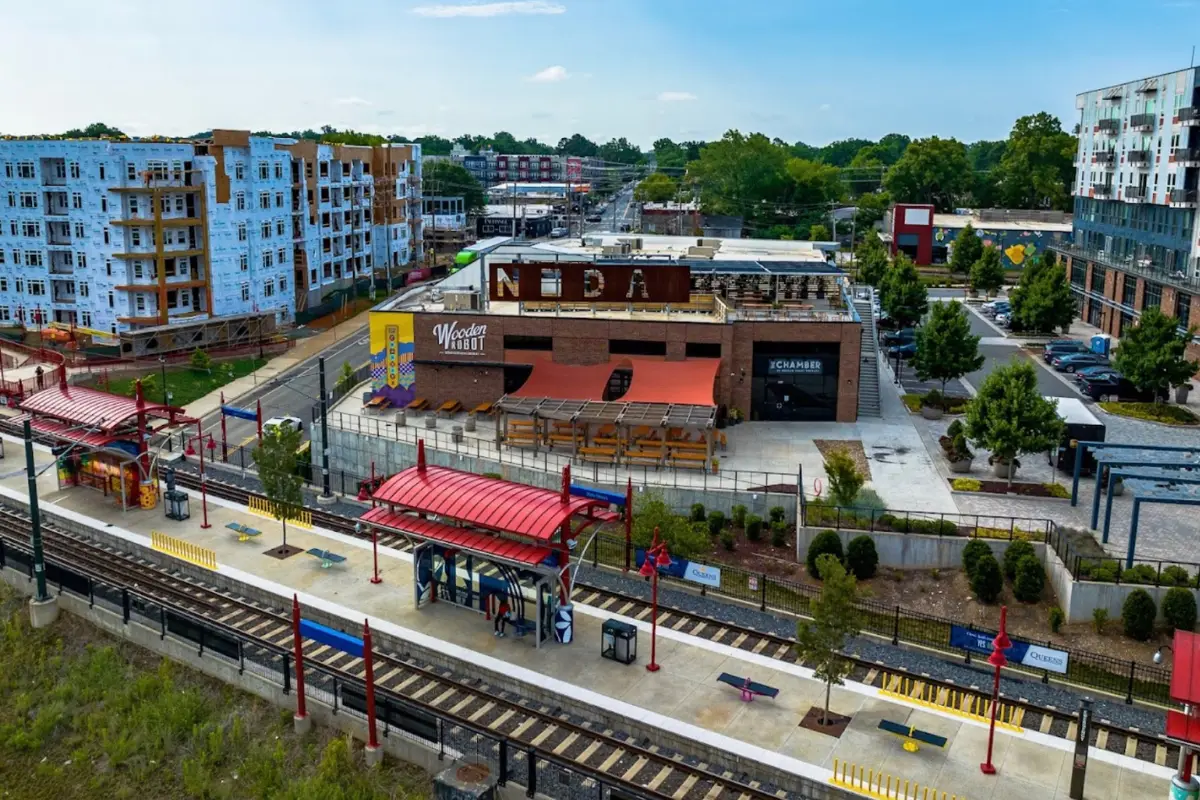
NoDa, short for North Davidson, started as a mill village and stayed small-scale even as the arts district grew up around it, which is why exchange buyers looking for boutique multifamily and small-bay retail keep circling back to this pocket of Charlotte rather than the taller product going up in South End a few miles south. The commercial spine along North Davidson Street runs on storefronts sized for a single tenant rather than anchor boxes, home to galleries, music venues, and the breweries that helped put the neighborhood on the map, while nearby residential stock leans toward converted mill-village bungalows and small-lot infill instead of high-rise towers. North Carolina does not impose a state level transfer tax on real estate transactions, though local documentary fees may apply. Investors selling property in NoDa often use nationwide identification to trade a small, character-driven asset for a different scale or market entirely, and we help clients meet the 45-day identification and 180-day closing deadlines required under Section 1031 whether they're staying in Charlotte or looking elsewhere.
Small-Bay Retail, Bungalows, and Mill Conversions
NoDa, short for North Davidson, started life as a mill village and stayed small-scale even as the arts district grew up around it, which is exactly why exchange buyers looking for boutique multifamily and small-bay retail keep circling back to this pocket of Charlotte instead of the taller product going up in South End a few miles south. It remains one of the few Charlotte neighborhoods where a mill-era street grid and a modern arts scene coexist without one having fully displaced the other.
The commercial spine along North Davidson Street still runs on storefronts sized for a single tenant rather than anchor boxes, home to galleries, music venues like the Neighborhood Theatre, and breweries such as NoDa Brewing Company that helped put the neighborhood on the map. Residential stock nearby leans toward converted mill-village bungalows and small-lot infill rather than the high-rise towers found closer to Uptown, which keeps multifamily here scaled to duplexes, fourplexes, and boutique apartment buildings rather than 200-unit communities.
The Blue Line Extension runs near enough to NoDa to bring transit-oriented redevelopment pressure to parcels along its edges, even though the historic core of the district has largely resisted the kind of ground-up construction reshaping South End.
A Neighborhood That Trades on Character, Not Scale
Because NoDa's built environment stayed intentionally small, exchange buyers here are typically underwriting fewer units or less square footage per deal than in South End or University City, which means per-door or per-square-foot pricing carries more weight than total deal size when comparing NoDa property to other Charlotte submarkets.
That scale also shapes who's competing for a given listing. A single storefront or a fourplex draws local owner-operators and small private investors rather than the institutional funds bidding on South End's ground-up towers, which can make NoDa one of the more approachable corridors in Charlotte for an exchange buyer working with a modest replacement-property budget.
Finding Replacement Property in a Small-Bay Market
Because NoDa doesn't turn over large blocks of inventory the way newer corridors do, realistic identification here often means watching individual buildings and small multi-tenant blocks rather than waiting for a big listing to hit the market, and starting that watch well before the 45-day window opens on the relinquished-property sale. Financing on small-bay retail and boutique multifamily can be less standardized than financing for larger stabilized assets, so confirming a lender's comfort with a specific building's size and tenant mix is worth doing early. Any question about how a mixed live-work or gallery-retail use affects the exchange should go to a tax advisor and qualified intermediary before the identification is locked in.
Diligence Items Specific to NoDa
Recurring issues on NoDa deals include:
- Historic-district design review requirements affecting exterior changes to mill-era buildings
- Parking constraints tied to narrow, pre-automobile-era street grids
- Mixed live-work zoning that blends residential and small commercial uses on the same parcel
- Redevelopment pressure and rezoning activity near the Blue Line Extension corridor
- Shared wall or party-wall agreements common to attached storefront buildings
Closing on Character-Driven Property
Small-bay and mixed-use buildings in NoDa sometimes carry unrecorded tenant improvements or informal use arrangements built up over years of independent ownership, so it's worth confirming everything currently operating in the building matches what's on the lease and the certificate of occupancy before scheduling a closing inside the 180-day exchange period.
Long-time NoDa property owners often know which tenants have been operating on handshake arrangements for years, and pulling that history out before closing, rather than discovering it after, keeps a straightforward small-bay purchase from turning into a post-closing dispute over occupancy rights.
Popular Exchange Paths in NoDa Charlotte
Multifamily Communities
Boutique multifamily buildings — duplexes, fourplexes, and small apartment buildings converted from mill-era structures — are among the most commonly exchanged NoDa asset types, appealing to investors who want Charlotte exposure at a smaller scale than South End's high-rise product.
Learn moreRetail and Mixed Use
Small-bay storefronts along North Davidson Street benefit from the district's arts and music scene foot traffic. Investors exchange these properties to capture NoDa's character-driven demand or diversify into other markets.
Learn moreReplacement Property Identification
Because NoDa turns over inventory in small blocks rather than large listings, investors often need broader nationwide identification support to fill out a realistic 45-day list alongside any local candidates.
Learn moreForward Exchange Coordination
Forward exchanges are the standard structure for NoDa transactions. Our coordination service manages the process from relinquished sale through replacement closing, including historic-district review timelines where they apply.
Learn moreMixed Use
Mixed live-work buildings that blend small commercial space with residential units are common in NoDa's older mill-village blocks and appeal to investors seeking a single asset with diversified income.
Learn moreMarket Comparable Analysis
Because NoDa pricing runs on a per-door or per-square-foot basis more than total deal size, comparing a candidate property against recent small-bay sales helps investors underwrite accurately before identifying it.
Learn moreFrequently Asked Questions
What types of properties qualify for 1031 exchanges in NoDa, Charlotte, NC?
In NoDa, properties held for investment or business purposes qualify, including small-bay retail storefronts, boutique multifamily buildings, and mixed live-work property. Personal residences do not qualify unless converted to rental use before sale.
Are there transfer taxes on 1031 exchanges in NoDa, Charlotte, NC?
North Carolina does not impose a state level transfer tax on real estate transactions in NoDa. Local documentary fees may apply. A 1031 exchange defers federal capital gains tax but does not eliminate these local fees.
How long do I have to identify replacement properties after selling in NoDa?
After selling a property in NoDa, you have 45 days to identify potential replacement properties in writing, then must close on at least one identified property within 180 days of the relinquished property's sale date.
Can I exchange a NoDa building for a property in another state?
Yes. Like-kind exchange rules allow nationwide property identification, so a NoDa property can be exchanged for replacement property anywhere in the United States, which is common among investors looking to diversify out of a single small-bay Charlotte submarket.
Does the Blue Line Extension affect NoDa replacement property?
Parcels along its edges have seen redevelopment interest and rezoning activity, though the historic core of the district has largely stayed at its original scale. That distinction is worth confirming for any specific NoDa parcel before identifying it.
Example of Our Work
Example of the type of engagement we can handle
Location: NoDa, Charlotte, NC
Situation: An investor selling a small mixed-use building in NoDa wanted to identify replacement properties within 45 days, considering both a similar-scale local asset and a larger out-of-state multifamily property.
Our Approach: We evaluated small-bay NoDa listings alongside nationwide multifamily candidates, comparing per-door pricing and management intensity across both paths, and coordinated with a qualified intermediary on identification documentation for both scenarios.
Expected Outcome: The client identified both a local and an out-of-state property within the 45-day window and closed on the out-of-state multifamily asset within 180 days, successfully deferring capital gains tax while diversifying beyond a single small Charlotte submarket.
Related Locations
Build a NoDa Charlotte Sale-to-Replacement Plan
Share the planned sale, request a free property list, or talk through direct and passive replacement options with a Charlotte 1031 specialist.
Free Charlotte Exchange Guidance
Start with the property you plan to sell.
Talk through the sale, timing, replacement priorities, direct ownership, net-lease property, and available DST options.