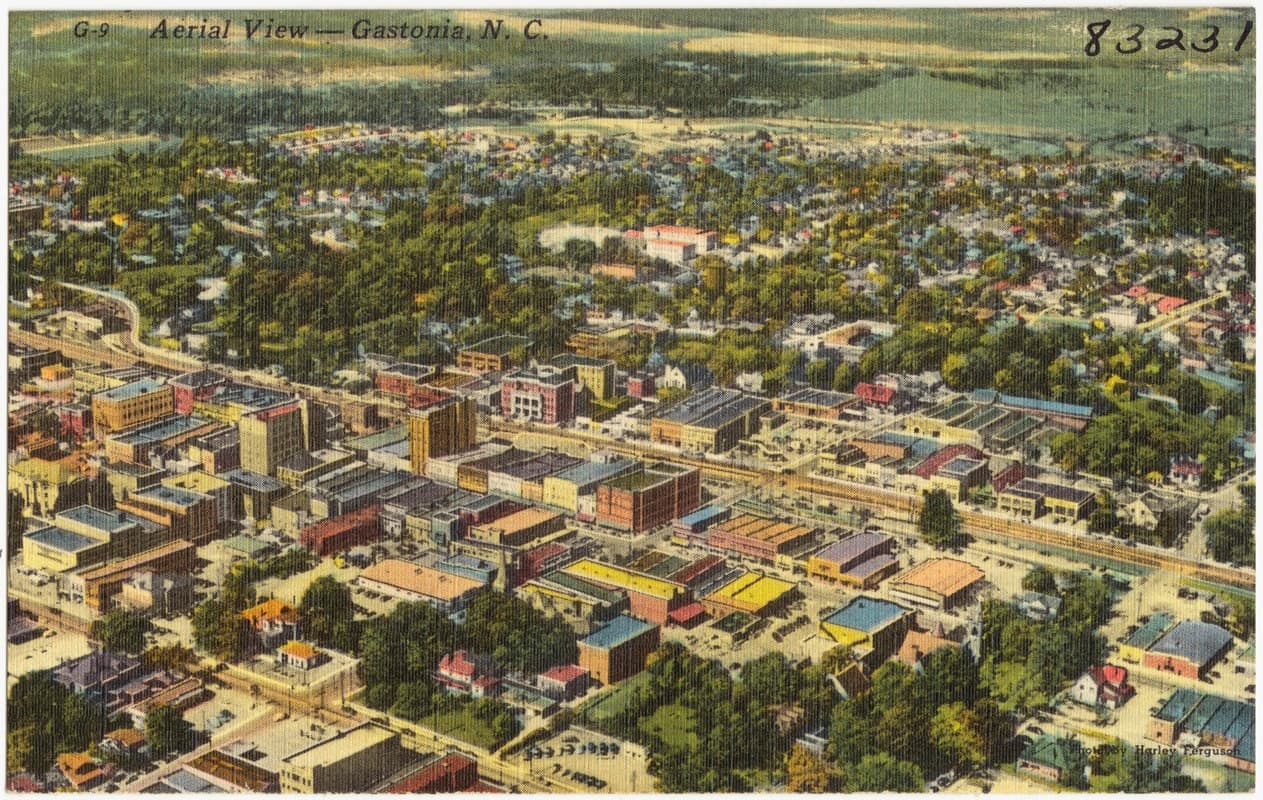
Gastonia, NC functions as a western Charlotte metropolitan area exchange destination for investors seeking industrial, multifamily, and retail replacement properties. The city's manufacturing heritage and strategic location create unique market opportunities for exchange investors from Charlotte, NC and surrounding regions.
Exchange activity in Gastonia includes industrial facilities, multifamily communities, and retail properties serving the local market and broader region. The area benefits from its position along major transportation routes and proximity to Charlotte, NC. North Carolina transfer tax considerations apply, though state level transfer taxes are not imposed.
Our nationwide property identification support includes Gastonia and surrounding markets. We help investors evaluate Gastonia replacement properties within the context of broader exchange strategies, considering both local industrial strengths and nationwide alternatives.
The Mill Buildings Are Still The Story
Gastonia grew up on cotton, and even twenty years into a very different economy, the mill footprint still shapes what an exchange buyer finds on the ground. West of Charlotte on US-321 and I-85, Gaston County's seat carries a different feel than the newer suburban rings closer to Uptown, and a coordination plan built for those newer submarkets tends to miss what actually makes Gastonia work.
Loray Mill, once one of the largest textile mills in the country, has been converted into apartments and mixed-use space, and it's not the only one. Smaller mill buildings scattered through downtown and along the rail lines have followed a similar path over the years, some fully redeveloped and others still sitting partially vacant waiting on capital. An exchange buyer evaluating one of these buildings needs to know which stage of that redevelopment cycle a given property is actually in, because the answer changes everything from financing to expected lease-up timeline.
Franklin Boulevard and the US-29-74 corridor carry the more conventional retail and service commercial stock, and that's usually the easier lane for an investor who wants straightforward income rather than a redevelopment project.
Downtown Gastonia itself, centered on the old courthouse square, has picked up some of the same adaptive-reuse energy as the mill district, with a handful of vacant storefronts converting to restaurants and small offices over the past several years. It's a smaller-scale version of the same story playing out in the mill buildings, just with less capital and less redevelopment risk involved.
What Trades In Gastonia Right Now
The candidates that come up most often in a Gastonia search fall into a handful of categories, and each one comes with its own diligence checklist:
- converted or partially converted mill buildings with mixed-use potential
- retail and service commercial along Franklin Boulevard
- light-industrial and warehouse space near the rail corridor and I-85
- small office buildings in and around downtown Gastonia
Why Franklin Blvd And The Mill District Don't Behave The Same
A generic exchange quote priced off average Charlotte-metro comps will usually miss the split inside Gastonia itself. Franklin Boulevard retail trades closer to standard suburban cap rates, while a mill-district property carries redevelopment risk, environmental history tied to a century of textile operations, and often a longer runway before it produces stabilized income. Treating both the same way in an identification list is how an investor ends up disappointed with either the timeline or the return.
Proximity to Crowders Mountain and the growing recreation draw on Gastonia's west side has started to pull some retail demand in that direction too, which is worth factoring into a longer hold horizon. I-85's continued freight traffic through Gaston County also keeps steady pressure on the industrial and warehouse side of the market, independent of whatever happens downtown or along Franklin Boulevard, so it pays to treat that segment as its own line item rather than folding it into a blended metro average.
Coordinating An Exchange Into Gastonia
Because Gastonia sits in Gaston County rather than Mecklenburg, title and tax records run through a separate county system, and a lender or QI unfamiliar with that distinction can slow things down unnecessarily. For any former mill property, get environmental Phase I work started early, since a century of textile manufacturing can leave soil or groundwater issues that take time to clear and directly affect the 45-day identification decision.
What A Gastonia Candidate File Should Include
For mill-district properties, request the full environmental history and any existing Phase I or Phase II reports rather than assuming a clean site, and confirm current occupancy against the redevelopment plan rather than the building's original leasing projections. For Franklin Boulevard retail, a standard rent roll and tenant estoppel review is usually sufficient, though it's worth confirming the tenant mix hasn't shifted toward more marginal credit since the last lease renewal cycle. It's also worth pulling the city of Gastonia's current redevelopment incentive agreements on any mill property, since several conversions in the district have relied on local tax abatements or grant programs whose terms transfer to a new owner and can affect the deal's actual net return.
Popular Exchange Paths in Gastonia
Industrial and Flex
Gastonia industrial properties benefit from the area's manufacturing heritage and strategic location along transportation routes. Warehouse, distribution, and flex facilities serve local businesses and regional distribution networks. These properties offer stable replacement options for exchange investors.
Learn moreIndustrial Property Identification
Industrial property identification in Gastonia focuses on warehouse, logistics, and flex facilities suitable for 1031 exchanges. We help investors from Charlotte, NC and other markets identify Gastonia industrial properties that meet exchange requirements and investment objectives.
Learn moreMultifamily Communities
Gastonia multifamily properties serve residents working in Charlotte, NC and the local area. The city's affordability and proximity to employment centers drive rental demand. Multifamily communities in Gastonia provide stable replacement property options for exchange investors.
Learn moreReplacement Property Identification
Our nationwide identification network includes Gastonia properties alongside other markets. We coordinate searches within the 45 day window, evaluating Gastonia opportunities based on property fundamentals, tenant quality, and exchange requirements to find optimal replacement matches.
Learn moreRetail and Mixed Use
Gastonia retail properties serve local residents and benefit from steady foot traffic. Strip centers and neighborhood retail offer stable income streams. These properties provide reliable replacement options for investors completing exchanges from Charlotte, NC and other markets.
Learn moreMarket Comp Analysis
Market comparable analysis for Gastonia replacement properties helps investors understand pricing relative to similar assets in Charlotte, NC and surrounding markets. This analysis supports informed replacement property selection and exchange structuring decisions.
Learn moreFrequently Asked Questions
What types of replacement properties are common in Gastonia, NC?
Gastonia, NC replacement properties typically include industrial facilities, multifamily communities, and retail centers. The area's manufacturing heritage and proximity to Charlotte, NC create demand for these property types. Our nationwide identification network includes Gastonia opportunities.
Are industrial properties in Gastonia, NC suitable for 1031 exchanges?
Industrial properties in Gastonia, NC can serve as suitable replacement properties for 1031 exchanges. Warehouse, distribution, and flex facilities offer stable income streams and long term tenant relationships. We help investors from Charlotte, NC and other markets identify Gastonia industrial opportunities.
How does Gastonia, NC compare to Charlotte, NC for replacement property investment?
Gastonia, NC offers different market dynamics than Charlotte, NC, including potentially lower entry prices and strong industrial fundamentals. Investors often consider Gastonia alongside Charlotte properties when identifying replacement options. Our nationwide search includes both markets.
What factors make Gastonia, NC attractive for 1031 exchange replacement properties?
Gastonia, NC offers strategic location advantages, industrial property strengths, and proximity to Charlotte, NC employment centers. These factors support property performance and make Gastonia suitable for investors seeking stable replacement properties for their 1031 exchanges.
What makes a former mill building different from a standard retail purchase?
<p>A mill property often carries redevelopment risk and environmental history tied to decades of textile manufacturing, both of which need dedicated diligence a standard retail deal wouldn't require.</p>
Example of Our Work
Example of the type of engagement we can handle
Location: Gastonia, NC
Situation: An investor selling an industrial property in Charlotte, NC needed to identify replacement properties within the 45 day window. The investor wanted to evaluate Gastonia industrial opportunities alongside other markets to find the best replacement option.
Our Approach: We coordinated a nationwide search that included Gastonia industrial facilities. We evaluated property fundamentals, tenant quality, and lease terms to identify qualified replacement options. We worked with the qualified intermediary to structure proper identification documentation.
Expected Outcome: The investor identified Gastonia industrial properties within the identification window and proceeded with a replacement purchase. The exchange deferred capital gains taxes while transitioning to a Gastonia industrial investment aligned with the investor's objectives.
Related Locations
Build a Gastonia Sale-to-Replacement Plan
Share the planned sale, request a free property list, or talk through direct and passive replacement options with a Charlotte 1031 specialist.
Free Charlotte Exchange Guidance
Start with the property you plan to sell.
Talk through the sale, timing, replacement priorities, direct ownership, net-lease property, and available DST options.